IndyGo’s number one priority is safety. Our See Something, Say Something campaign is part of a nationwide effort to recognize and respond to suspicious behavior and incidents. Read below to learn how you can help us ensure a safer mobility experience for ALL while using our services.
If You See Something, Say Something
Safety for our riders AND teammates is IndyGo’s number one priority. However, we’re not always able to see or be present for every incident when it occurs. This is where we rely on folks like you to report these situations, so we can help and provide a more welcoming and comfortable environment for everyone. Just remember: If you SEE something, make sure to SAY something.
What to Report
Our agency takes every reported incident seriously, no matter how small. Examples of reportable incidents include:
IndyGo’s online Safety and Security Form is available 24/7 to log incidents into our system manually. If you witnessed an incident example from the list above, click the button below to fill out the form.
Alternatively, you can call into our Customer Care Center at 317.635.3344 using any phone to inform our team of a situation you witnessed.
Note: In the rare case that you’re witnessing a life-threatening emergency, please dial 9-1-1 to notify law enforcement.
Other Things to Keep in Mind
DO pay attention to the physical characteristics of anyone behaving suspiciously, including their gender, build, hair color, clothing and distinctive markings (tattoos or birthmarks) to help identify the person.
DO notice if they leave on foot or by car.
DO pay attention to the make, model and license plate of the vehicle they leave in.
DO note any other helpful information.
DON’T take any direct action yourself.
DON’T confront or interact with the individual or group behaving suspiciously.
DON’T reveal your suspicions.
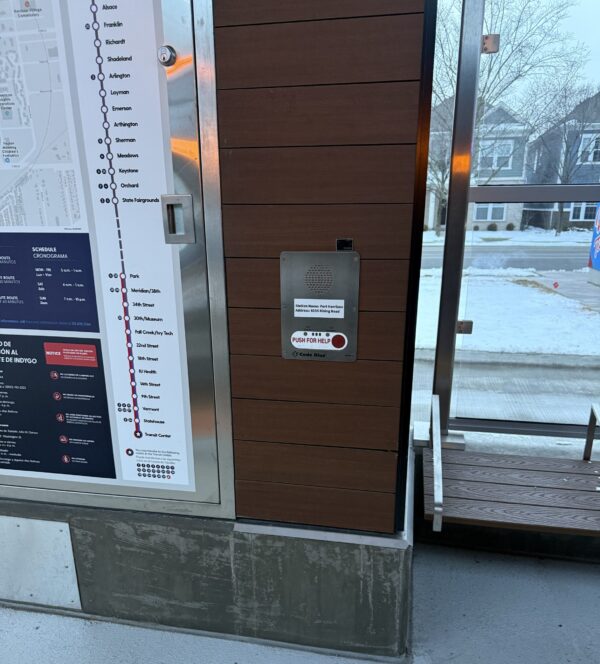
*If you are at a Bus Rapid Transit (BRT) station platform, remember you can also push the emergency phone button shown in the image to the right to report an incident.
Human Trafficking Awareness
Human traffickers use public transit to recruit and transport millions of adults and children into forced labor and commercial sex. A 2018 Polaris survey of 104 survivors found that during their experience, 33% were transported by public buses. Anyone can become a victim. Traffickers can be a friend, family member, romantic partner, employer, acquaintance or stranger. It’s crucial to recognize the signs that include:
Someone else controlling movement, money, ticket and speech
Expired or fake ID
Physical or emotional distress
Abuse or branded tattoos (typically located on the back of neck, behind the ear or inside wrist)
Unaware of where they are, where they have been or where they are going
Answers that may sound scripted or inconsistent
Lack of knowledge about who is meeting them or who is with them
Suspicious pairing of an adult and a minor
Offers to exchange sex for a ride, meal or help
Works excessively long hours with few or no breaks
References frequent travel to other cities or towns
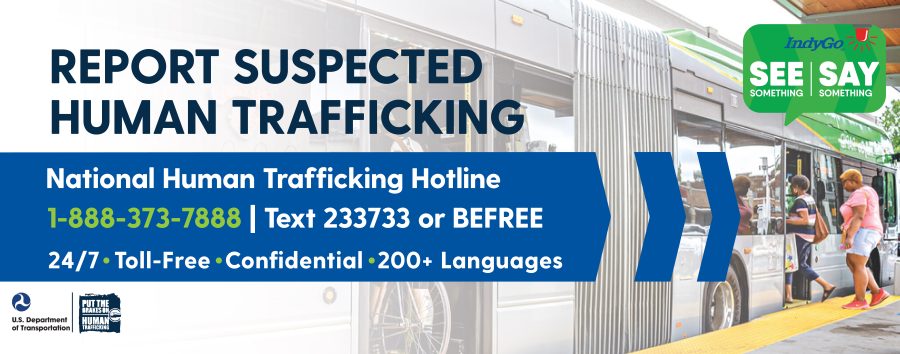
If you suspect trafficking, respond carefully, do not intervene directly. Instead, report tips to the National Human Trafficking Hotline by calling 1-888-373-7888, texting 233733 (BEFREE) or completing the form here. Provide as much information as you can:
Who or what you saw (physical identifiers of individual(s), nicknames overheard, approximate age, license plate, vehicle description, etc.)
When you saw it (date and time)
Where it occurred
Why it’s suspicious (what behaviors or observations led you to report a tip)
For additional information, please visit the US Department of Transportation website here.